
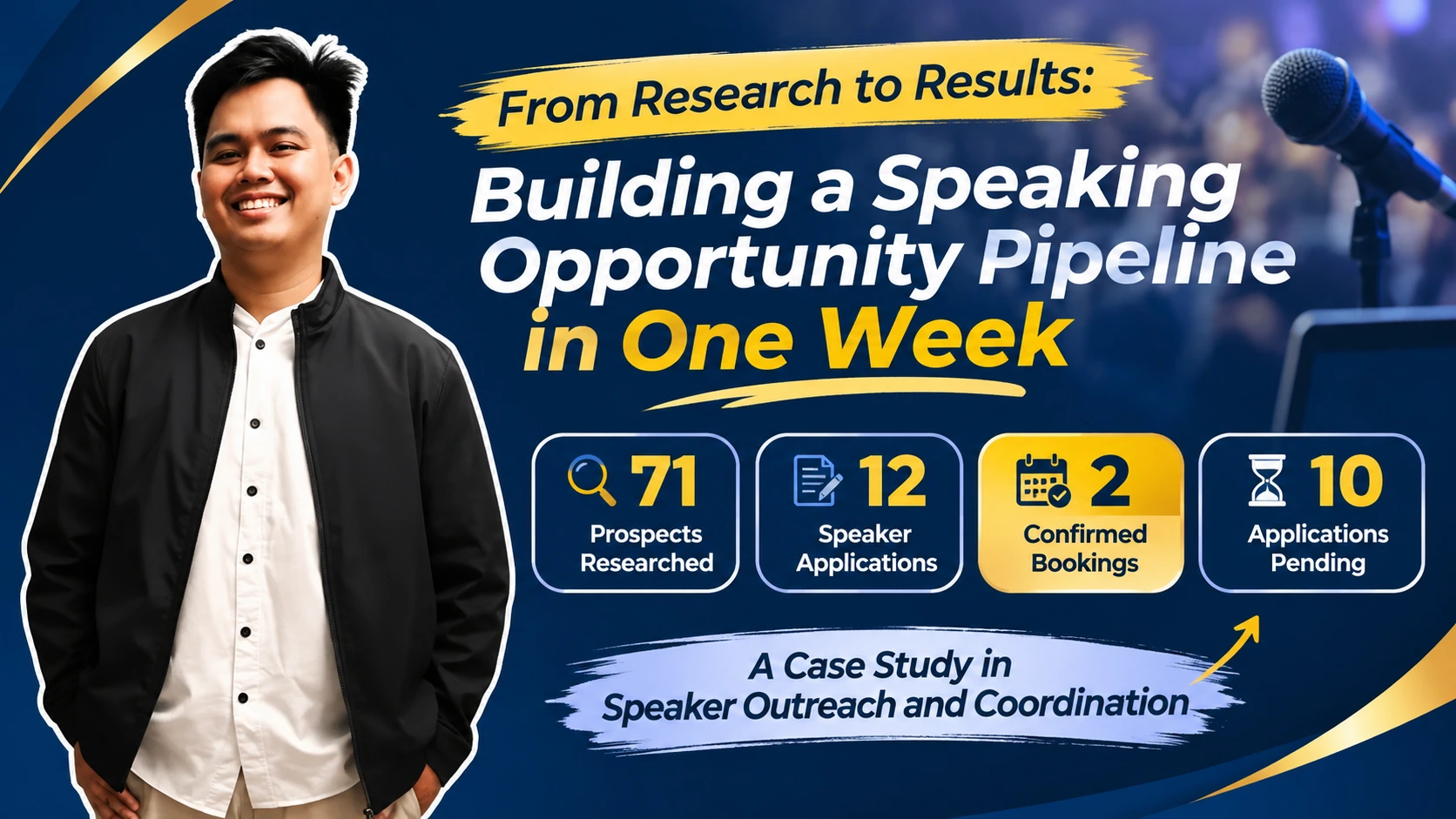
From Research to Results: Building a Speaking Opportunity Pipeline in One Week
A practical look at researching speaking opportunities, managing applications, following up with event organizers, and coordinating confirmed bookings across two client projects.
A speaking opportunity pipeline takes more than finding events and sending applications. It requires focused research, careful qualification, organized tracking, and consistent communication, especially when timelines are tight.
Across two business client projects, I supported speaker outreach and booking coordination by researching potential virtual summits and speaking opportunities, preparing applications, communicating with event organizers, and monitoring each opportunity through its next step.
This case study shares the workflow and measurable activity from that effort. It also reflects an important reality of outreach work: researching a prospect, submitting an application, and receiving a confirmed booking are three different stages.
At a glance: The outreach results
During the one-week pipeline-building effort, I researched 71 potential opportunities. From that research, 12 were selected for application, 2 resulted in confirmed speaking bookings, and 10 applications remained pending a response or decision at the time of reporting.
How to read these numbers: The 71 figure represents researched prospects, not applications. The 12 figure represents submitted applications. The 2 confirmed bookings are outcomes, while the remaining 10 applications were still awaiting responses or decisions at the time these figures were recorded.
What the work involved
My role combined virtual summit research, speaker application management, outreach communication, and event coordination support for two clients. The goal was to build a relevant and trackable pipeline rather than submit applications simply to increase volume.
- Researching and identifying relevant virtual summits, conferences, and speaking opportunities.
- Evaluating event relevance, target audiences, speaker requirements, and application processes.
- Preparing and submitting speaker applications on behalf of the clients.
- Communicating directly with event organizers and hosts.
- Following up on submitted applications and pending inquiries.
- Coordinating speaker schedules, promotional materials, and event requirements.
- Maintaining trackers and monitoring application progress.
From prospect research to confirmed bookings
- Research and identify. I reviewed potential events and speaking opportunities, looking at audience fit, topic relevance, speaker requirements, and how to apply. Not every researched prospect was suitable or ready for an application.
- Qualify and prioritize. I considered whether the opportunity aligned with each client's expertise and goals, then prioritized suitable prospects for outreach and applications.
- Prepare and submit applications. For selected opportunities, I organized the required information and submitted speaker applications on the clients' behalf. This stage produced 12 submitted applications from the wider pool of 71 researched prospects.
- Follow up and communicate. I monitored responses, contacted organizers or hosts when needed, and kept application statuses updated. An application does not automatically lead to an invitation or booking.
- Coordinate confirmed opportunities. When bookings were approved, I supported the next coordination steps, including schedules, promotional materials, and event requirements.
A tight timeline, an honest lesson, and a last-minute approval
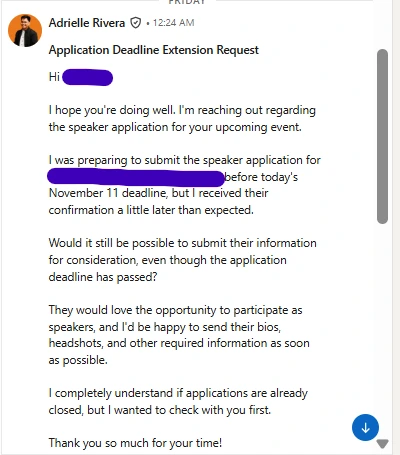
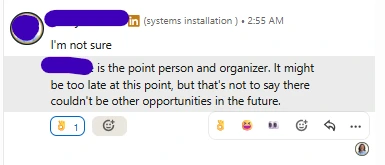
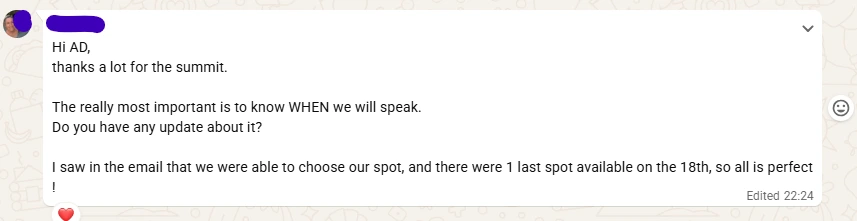
Not every part of this project went exactly to plan. We did not meet the original deadline. I continued doing what I could within the time available, including making a direct effort to contact the event planner and clarify the status of the opportunity.
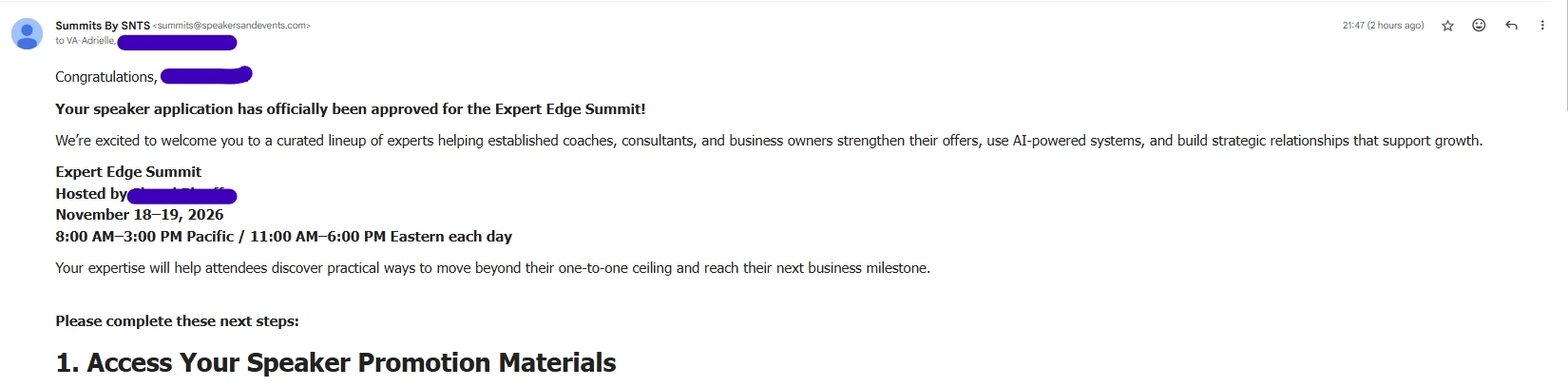
After that follow-up, an application was approved at the last minute. It was a useful reminder that timely communication and persistence can matter, even when a process has become time-sensitive. It is also important to be transparent: the deadline was missed, and the late approval did not change that fact.
There were also applications that did not move forward. Rejections are part of speaker outreach, just as pending decisions are. Each response helps clarify the difference between an opportunity that looks promising during research and one that is ultimately approved by an event organizer.
What the results tell us
The figures show activity and progress through different stages of the pipeline. The 71 researched prospects created a pool of possibilities. The 12 submitted applications represented the opportunities that moved forward to a formal application. Two were confirmed, while 10 were still pending at the time these figures were recorded.
This is why a useful outreach report should track more than the number of applications sent. It should distinguish between research, qualification, submission, follow-up, pending decisions, and confirmed bookings. That visibility helps clients understand what has been done and what still needs attention.
Lessons from managing a speaker opportunity pipeline
- Relevance matters more than raw volume. A researched event is useful when its audience, topics, and requirements make sense for the speaker.
- Research and applications are separate work stages. The 71 prospects were researched; only 12 progressed to submitted applications.
- Follow-ups need structure. Tracking contacts, dates, statuses, and next steps makes it easier to manage pending applications.
- Approval is not guaranteed. Event organizers make the final decision, and applications may be declined or remain pending.
- Clear communication helps when timelines get tight. The last-minute approval reinforced the value of professional follow-up, while also reminding me to manage deadlines more carefully.
How virtual assistant support can help
Speaker outreach can involve many moving parts: discovering relevant events, checking requirements, preparing applications, communicating with organizers, tracking responses, and coordinating details after approval. Consistent administrative support helps keep these steps organized so speakers, coaches, and business owners can stay focused on preparing their message and showing up for their audiences.
This project reflects the kind of professional virtual assistant services I provide across research, speaker outreach, application management, follow-up communication, and event coordination.
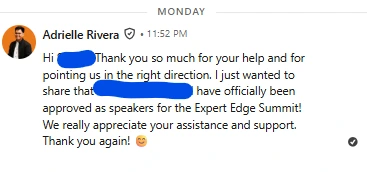
“Gratitude turns the work we do into something meaningful. Always make room to say thank you.” A reminder to appreciate the people and opportunities along the way
Looking for speaker outreach and coordination support?
If you're a business, speaker, coach, or entrepreneur looking to identify relevant speaking opportunities and keep applications organized, I can help with virtual summit research, speaker application management, follow-ups, and event coordination.
Let's make your speaking opportunity pipeline easier to manage, one organized step at a time.
Let's connect
Adrielle Rivera is a digital marketing professional with 3 years of experience in SEO, community management, content creation, and podcast support. He specializes in helping businesses build their online visibility through thoughtful content, authentic community engagement, and practical SEO strategies. With a background in Behavioral Science, Adrielle brings a people-focused approach to digital marketing, combining an understanding of people with data-driven SEO and web development practices. He continues to expand his expertise to help businesses strengthen their online presence and reach the right audience.